

Secure Connectivity Drives Smarter Port Operations
Every business has a handful of processes it simply cannot afford to have fail. When they slow down, everything downstream slows with them — orders, deliveries, customers, revenue. For a port, that pressure is constant and physical.
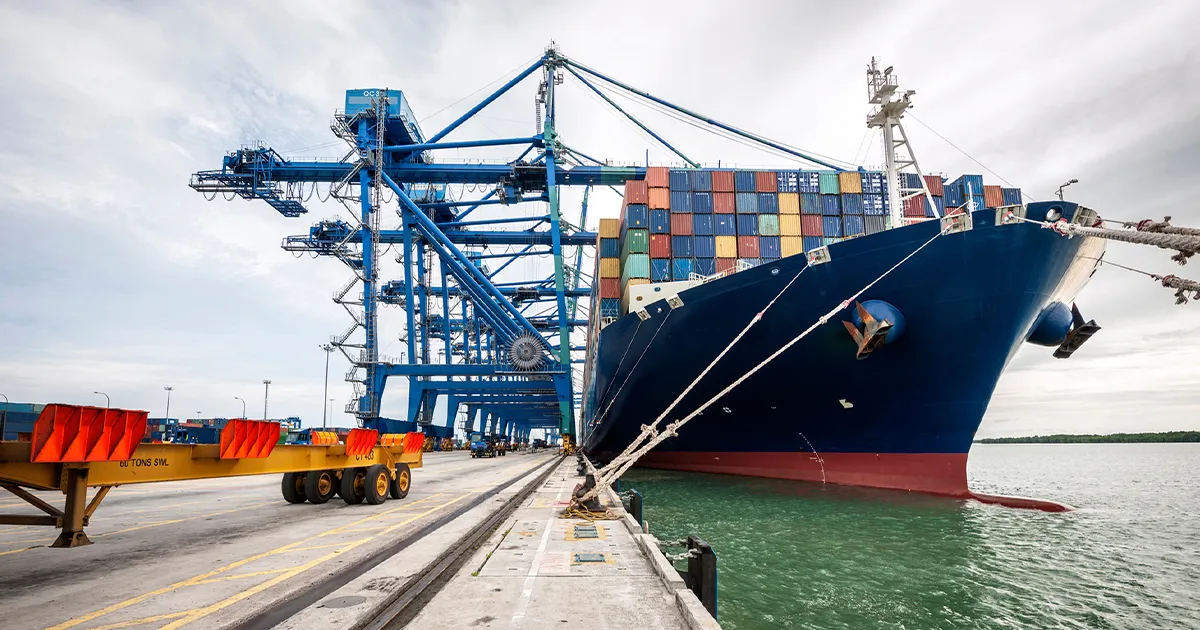
A container coming off a vessel passes through a dozen handoffs before it clears the gate: crane operators, yard planners, truck drivers, customs, security. Every handoff depends on people and systems staying in sync, in real time. At one of Malaysia's leading shipping ports, the network beneath those handoffs had quietly become the bottleneck.
Coverage was patchy in exactly the places where coordination mattered most, and as container volumes grew, the gaps became harder to absorb.
Their operations faced several challenges:
- A fragmented network: Connectivity had been built up in pieces over time, leaving no consistent layer across the port.
- Unreliable communications in critical zones: Quayside and yard teams working in the highest-risk areas had the least dependable coverage.
- No secure, prioritised channels: Mission-critical traffic competed with everything else on the same network, with no way to guarantee it got through.
- Congestion at peak: When vessel arrivals clustered, data traffic spiked and operations slowed with it.
- Limited real-time coordination: Without live visibility, teams worked from information that was already out of date.
For a port, these are not IT problems. They translate directly into berth delays, idle equipment, safety exposure and vessel schedules that slip.
HOW MAXIS BUSINESS HELPED
The port partnered with Maxis Business to replace a patchwork of connectivity with a single, secure foundation built for industrial operations.

Mobile Private Network. A dedicated network covering the port's entire operational ecosystem — quayside, yard, gates and warehousing. Coverage is engineered for the environment rather than inherited from public infrastructure, so performance holds up in the areas that are hardest to serve and traffic stays within the port's own network.


DRIVING REAL BUSINESS OUTCOMES
- Visibility and control. Real-time tracking gives planners a live view across the port ecosystem, so decisions on berth allocation, equipment deployment and yard movement are made on current information.
- Increased efficiency. Automated workflows removed manual handoffs and the delays that came with them, allowing teams to move more cargo through the same footprint.
- Safety and compliance. Reliable communications in critical zones mean incidents are reported and responded to faster, and surveillance coverage supports the port's regulatory obligations with a clear operational record.
- Business growth. Shipping lines and freight partners plan around predictability. More consistent turnaround times and reliable cargo visibility strengthen the port's service proposition and the confidence customers place in it.
The network is now infrastructure the port can build on — ready for the automation, analytics and AI-driven operations that come next.
Discover how Maxis Business empowers businesses to achieve their digital transformation goals. Explore more success stories and see the impact we can make for your business.